
Five Strategies to Overcome Financial Hardship
Financial Hardship: Let’s Talk About It
Everyone has their own definition of what a “financial hardship” is or what it feels like. In today’s economy, however, many of us are feeling the same burn, and facing similar financial hardships.
From heavy debt and increased living expenses to costly life changes and household challenges, many people are feeling strained from the weight of financial struggles and obligations.
- Increased Cost of Living
More than half of Americans say rising costs of living are getting in the way of them reaching their financial goals. Not to mention, an overall increase in living costs can attribute to several other concerns – including food insecurity, utility shutoff risks, and emergency savings depletion.
Pressure from continuously rising living costs makes sticking to a budget and expense planning even more important.
- Job Loss & Reduced Income
It’s more than just being unemployed. Layoffs, reduced and unpredictable work hours, and unreliable contract work can disrupt incomes and make consistent saving or debt repayment impossible. The goal of having a nest egg of 3-6 months’ worth of income in a savings account exists for this reason.
- Life Events and Transitions
Even during happy moments, it’s easy to feel like strain of financial hardship. Marriage, divorce, a child goes to college, a child is born… life happens. And often, it’s pricey. Major life changes like these can quickly disrupt financial plans, as well as take a toll on your mental health. Remember, with any form of financial hardship, you come first. Invest in yourself before anything else.
- Limited Emergency Savings
All the reasons mentioned above can impact emergency savings. When life happens, cost of living increases, or we lose our jobs, we lean on our safety net. That’s what it’s there for, after all. However, a CBS MoneyWatch report shows nearly 60% would be unable to cover a surprise $1,000 expense due to a lack of emergency savings. Remember: once you’ve depleted your emergency savings, prioritize building it back up so that you can have a safety net again, should you need it.
- Debt Burden
Debt. The other four-letter word.
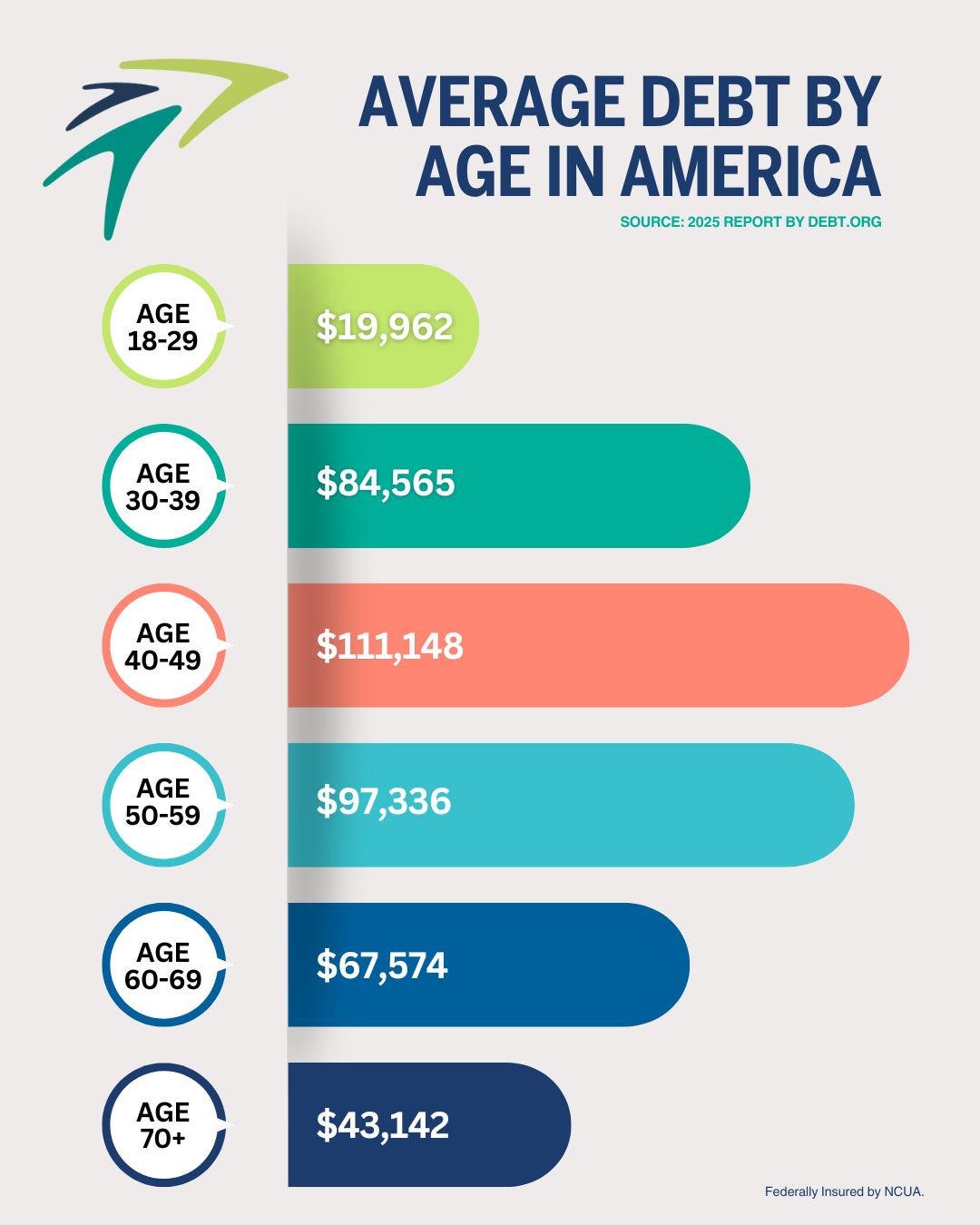
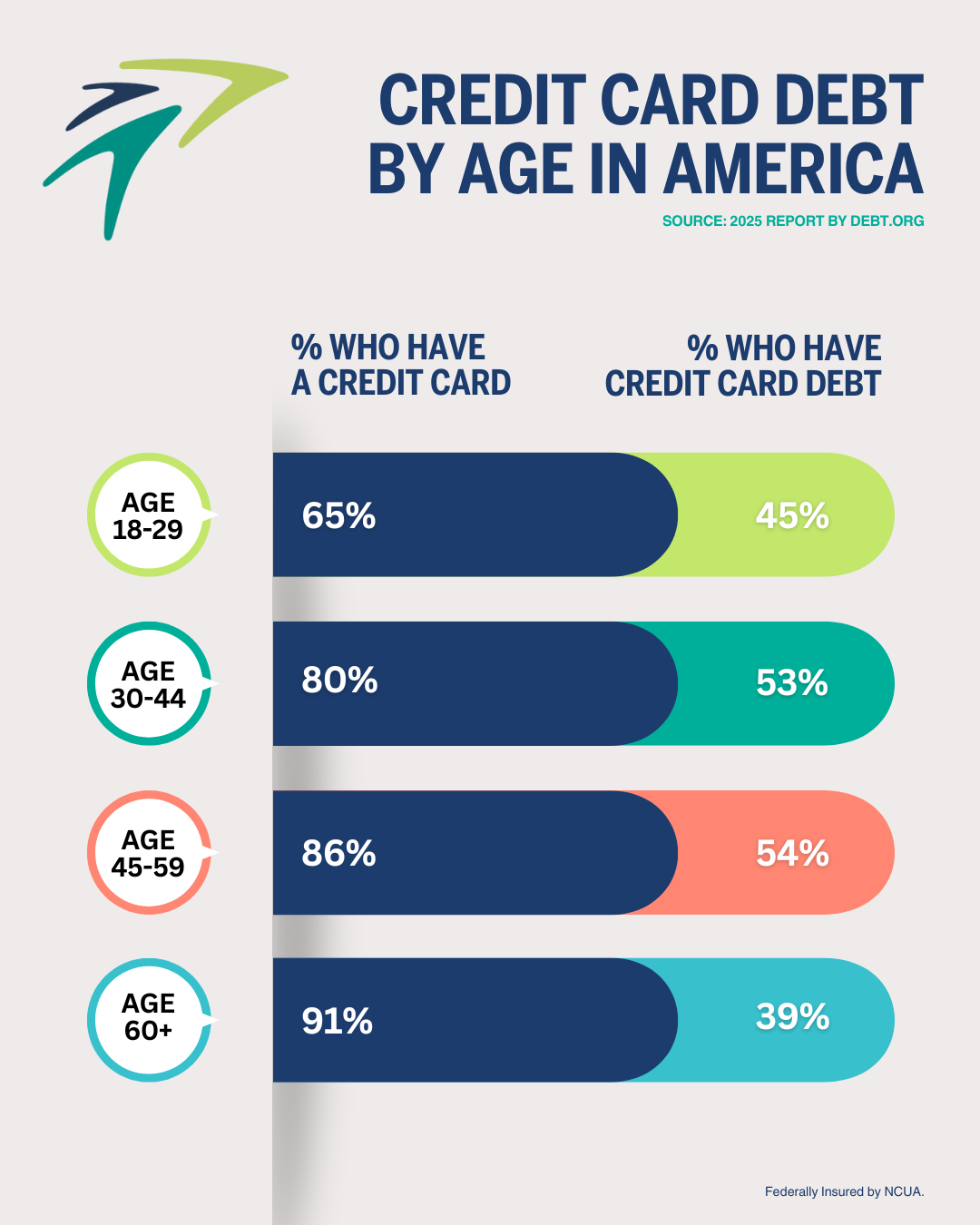
Here’s a look at how debt stacks up in America.
Year over year, these numbers continue to rise.
With 90% of Americans having some form of debt, you’re likely to see yourself as part of these statistics.
Note: this includes all forms of debt, from credit card debt to household debt, such as mortgages and auto loans. Source.
Debt burden overall, as well as from credit card debt specifically, is a prominent issue in America across all age groups, but credit card debt is highest amongst cardholders between the ages of 30-59.
So, what can we do?
How can we overcome debt and financial hardship and move forward with confidence?
Count on Your Credit Union
Can navigating your finances feel overwhelming? Yes.
Do you have to do it alone? Heck no!
Lean on your Credit Union for access to a dedicated financial advisor.
Together, we can review your debt and re-payment strategy – or even help you to build one.
We can also help you explore options like refinancing or loan consolidation, as well as resources and programs you may qualify for to help alleviate your debt faster.
Start with 5 Practical Steps:
Step 1: Audit Your Finances
Don’t set yourself up for failure. To make a plan that will work, you must put in the work. Review your last year of expenses to analyze spending patterns, areas for improvement, subscriptions that can be canceled, etc. then calculate what your total amount of debt is from all sources: this is what you’re working towards eliminating
- Action Item: Start by logging into your mobile banking app to download your last 12 months of account statements. Don’t forget about credit card statements too! This part can feel tedious, but it gives you the clearest picture of where you stand and where to start. It’s also the first step in building a budget.
Step 2: Build a Budget
Be sure to build it thoughtfully and with wiggle room – especially in the beginning. Remember to keep your budget simple and realistic. Your budget is your method of allocating your resources, so be mindful as you outline what you’re willing to spend on things like take-out and coffee runs. A few dollars here and there might not look like much at the time, but over time, it looks like debt. Factor fun and entertainment into your budget, just factor in limits as well. And remember: all good budgets are reviewed and readjusted on a regular basis.
Action Item: Now that you’ve audited your finances and determined your total amount of debt, it’s time to build a budget. First, ask yourself: What expenses can you easily reduce or cut out completely? Remember to prioritize your set monthly expenses first (i.e., rent, childcare, utilities, groceries, etc.), as well as high-interest debt. Make it fun: challenge yourself each month to see how much you add to your savings account!
Step 3: Make a Plan
It always pays to plan ahead. With clear planning and support, you can regain control of your financial situation and start working towards a more stable and secure future. Financial wellbeing isn’t a sprint – it is a journey that starts with one step, followed by another. With a firm handle on your total debt amount, credit score, spending habits, and savings goals, you can easily determine a timeline in which you want to Achieve your goal of becoming debt-free.
Action Item: Don’t make a plan on your own! Reach out to your Credit Union for help from a dedicated financial advisor. Think of the financial advisors at your Credit Union as your partners in planning! They’re here to review your budget (or even help you build one!), discuss your goals, and give you the tools you need to Achieve financial success.
Step 4: Stay on Track
Getting started is much easier than keeping it going! Stay on top of your financial goals, stick to your budget, and most importantly… when you have questions, ask them. Your Credit Union is here for you, your questions, and your success.
- Action Item: Continue to challenge yourself to save – you could even try paying yourself with every purchase with an Achieve It checking account! Also: keep yourself accountable by connecting with your credit union representative and/or financial advisor on a regular basis.
Step 5: Recognize the Little Things
Progress is a picture you paint, so it can look like lots of things. Celebrate small wins (like making coffee at home every day for an entire month) so you can build up your confidence and motivation to keep saving!
- Action Item: Be careful not to “reward” your good behavior with spending! It’s easy to think, “I’ve been great all month – I should splurge on something fancy.” And while that mindset is fine from time-to-time, it can easily add up and not only prevent you from reaching your goal of becoming debt-free, but it can keep you in debt and foster unhealthy spending patterns as well.
Let’s Get Started
We are in your corner and here to help you move forward with confidence. Together, we can turn challenges into opportunities for a stronger financial future.
When you’re ready to talk, we’re ready to listen. Reach out to us anytime to discuss your plan, or to build your plan Together with a financial advisor.